

The Importance of Risk Reduction in Food Labeling
Accurate and compliant labeling is imperative in the food industry, and yet manufacturers sometimes view it as an afterthought. That can be dangerous, as proper labeling is essential for meeting regulatory standards and for maintaining consumer and vendor trust — and a misstep can do long-term damage to brand equity. For all these reasons, strategies that balance proper labeling with production efficiency should be a key business priority.
Understanding Food Labeling Requirements
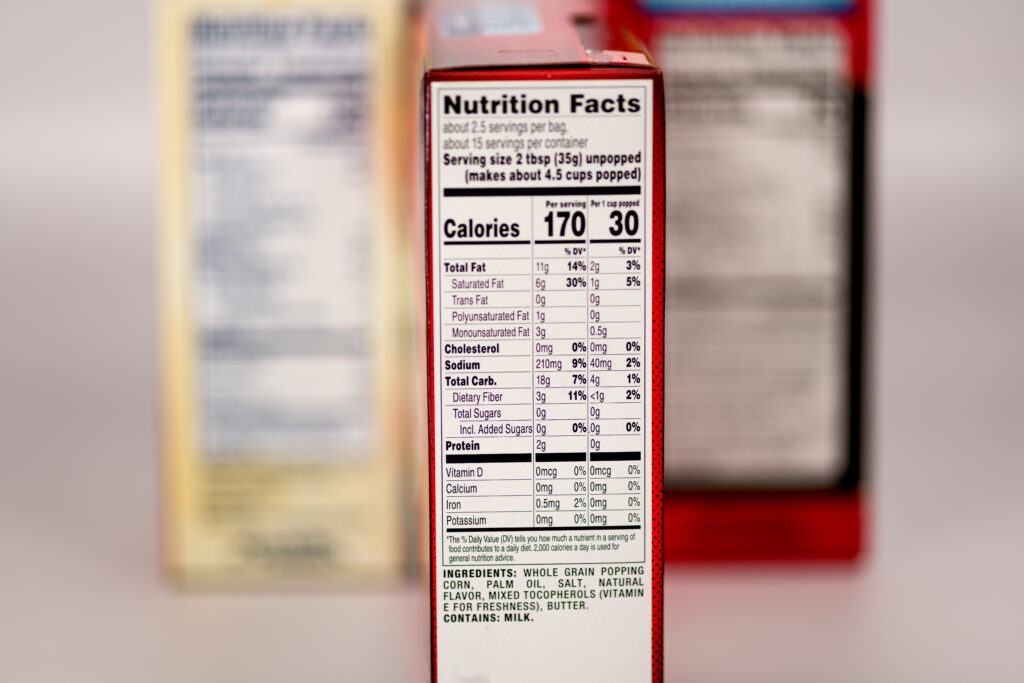
Regulatory compliance in food labeling is shaped by a complex web of national and international standards, including regulations established by the FDA, USDA and the European Food Safety Authority, among others. These standards dictate not only what information must appear on labels — elements like nutritional content, allergen statements and ingredient lists — but also how that information is presented to consumers. Staying current with requirements is essential for maintaining market access and for avoiding costly recalls or legal penalties.
Navigating food labeling regulations is challenging for product development teams. One common hurdle is the need to balance innovation with compliance, especially for new ingredients and formulations. Coordinating input from multiple departments, including product development, marketing and regulatory affairs, can lead to inconsistencies if data is not properly managed. Frequent changes in those regulations can also make it difficult to keep labels up to date — particularly for products sold in multiple markets.
Global market complexity amplifies these challenges. Each country may have unique requirements for label language, nutritional standards and permitted claims, which necessitates careful adaptation for every market. That makes data integrity a critical concern, because errors or gaps in product information can result in mislabeling and regulatory action. FoodChain ID’s expertise in global regulatory insights provides organizations a valuable advantage by helping them streamline compliance processes, maintain accurate data and confidently expand their products internationally. Our robust regulatory intelligence and product development solutions can reduce companies’ risk, improve label accuracy and accelerate products’ time to market.
Five Key Considerations When Choosing a Food Labeling Solution
Selecting the right food labeling solution is more than just a regulatory necessity. It’s a strategic imperative that can shape product success, consumer trust and business growth. As companies innovate and expand into new markets, the complexities of labeling multiply. Organizations must therefore evaluate solutions through the lens of accuracy, data integrity, workflow compatibility, scalability and cost efficiency. Here are five key considerations to guide the selection process.
1. Accuracy and Compliance
At the heart of any food labeling strategy is the imperative for accuracy and compliance. Labels must meet all relevant regulatory standards, from FDA requirements in the United States to the European Food Safety Authority’s guidelines abroad — and failure to comply can result in costly recalls, reputational damage and legal penalties. Therefore, a robust labeling solution should facilitate the creation of labels that are not only clear and informative, but also fully compliant with current regulations.
This starts with reliable data sources and rigorous validation processes. Nutrient panels, ingredient lists and allergen declarations must be derived from verified databases and be subject to regular audits. Automated validation features can flag discrepancies before they reach production and ensure that every label represents its product accurately. Ultimately, the right solution should provide peace of mind that your labels will withstand scrutiny from regulators and consumers.
2. Data Integrity and Collaboration
Accurate labeling is impossible without strong data integrity. Centralized ingredient and specification data are vital for generating precise nutrient panels and for substantiating claims such as “gluten-free” or “non-GMO.” A labeling system should enable seamless collaboration across departments, allowing R&D, product development, regulatory and quality assurance teams to access and update information in real time.
Audit-ready and traceable label inputs are essential for demonstrating compliance during inspections and when responding to consumer inquiries. The solution should maintain a detailed record of every change and ensure that all inputs can be traced back to their source. This transparency fosters trust and streamlines the process of updating labels as formulations evolve and regulations change.
3. Workflow Compatibility
A food labeling solution must integrate smoothly with existing workflows, especially between product development and labeling teams. Disjointed systems can lead to miscommunication, delays and costly errors. Look for a platform that supports cross-functional collaboration, thus enabling teams to exchange information easily and act on feedback promptly.
Integration with existing software and platforms, such as product lifecycle management (PLM) or enterprise resource planning (ERP) systems, is a key factor. The ideal solution will fit naturally into product development timelines and support iterative development without introducing bottlenecks. Real-time validation and proactive alerting features can help teams identify and resolve issues early to keep projects on track and ensure that labeling doesn’t become a roadblock to innovation.
4. Scalability and Flexibility
As businesses grow and diversify, their labeling needs become more complex. The ideal solution must be scalable and capable of supporting new products, markets and regulatory environments without requiring an overhaul. Flexibility is also essential. Whether you’re updating a single SKU portfolio or launching an entirely new product line, the system should easily scale up or down to accommodate various label formats and requirements.
In addition, user-friendly interfaces are crucial for ensuring that staff across departments can engage with the system effectively. A well-executed system will offer a design that cuts training time and minimizes errors by empowering teams to respond quickly to market demands and regulatory updates. Further, it should adapt across SKUs, formats and geographies to support innovation and operational efficiency.
5. Cost Efficiency and ROI
While upfront and ongoing costs are important considerations, evaluating the true value of a labeling solution requires a broader perspective. Risk mitigation, reduced rework and faster product launches all contribute to achieving optimal return on investment (ROI). A solution that minimizes labeling errors and regulatory noncompliance can get there quicker by reducing or eliminating the significant costs associated with recalls and fines.
Efficiency gains are another key metric. Automated workflows, centralized data management and real-time validation can speed up the labeling process to get products to market faster. When assessing solutions, consider how they will affect the speed and quality of product launches, as well as their potential to reduce manual effort and support long-term business growth.
Conclusion: Strategic Selection for Sustained Success
Choosing the right food labeling solution is a multidimensional challenge that requires careful consideration of:
- Accuracy
- Data integrity
- Workflow integration
- Scalability
- Cost efficiency
By prioritizing these factors, food and beverage manufacturers can not only ensure compliance and consumer safety but also drive innovation and competitive advantage. In a global marketplace where transparency and agility are paramount, a strategic approach to labeling is essential for building trust, supporting growth and achieving lasting success.
Build Labeling Confidence from Formulation to Market Launch
The five essentials outlined above are only the beginning.
In our eBook, Six Key Components for Successful Food Labeling, you’ll see how leading food and beverage innovators are:
- Reducing labeling rework through integrated systems.
- Achieving faster regulatory sign-offs with centralized data governance.
- Gaining cross-functional visibility that keeps stage-gate decisions on schedule.
Download the eBook to explore how to turn labeling from a risk into a competitive advantage.