The European Chemicals Agency (ECHA) has launched a public call for evidence to identify and assess substances of concern (SoC) found in packaging materials. This initiative is a critical step in supporting the European Commission’s obligations under the Packaging and Packaging Waste Regulation (PPWR), aimed at making packaging more sustainable, safe, and recyclable across the EU.
Why This Matters
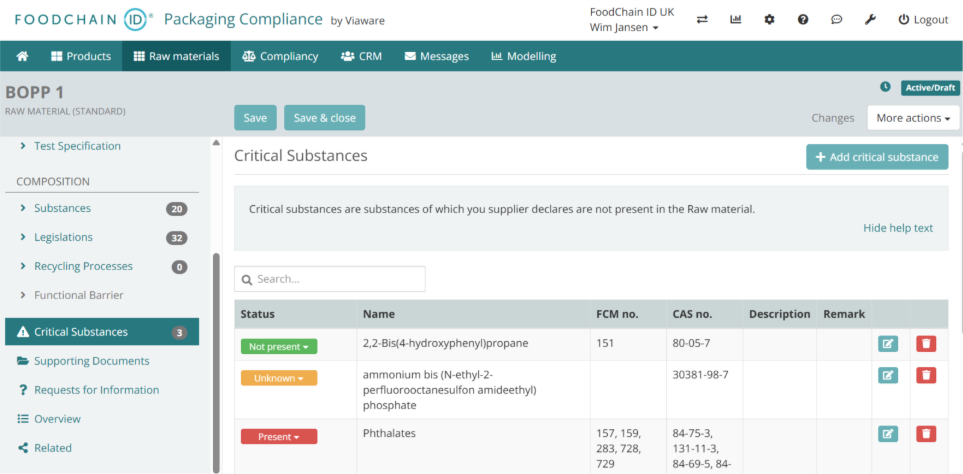
Substances of concern—such as certain plasticizers, heavy metals, and PFAS—can significantly impact the safety of packaging and its recyclability. When present in packaging materials, these substances may hinder reuse, complicate recycling processes, and pose risks to human health and the environment. It’s important to note that while this initiative focuses on chemical safety, it is being led by the European Chemicals Agency (ECHA)—not the European Food Safety Authority (EFSA). ECHA is responsible for the implementation of EU chemicals legislation, particularly under the REACH and CLP regulations, and focuses on the safe use of chemicals in general, including their presence in consumer products and materials. EFSA, by contrast, deals specifically with food safety and risk assessment related to the food chain, including substances in food contact materials. While both agencies play critical roles in ensuring safety, ECHA’s involvement here highlights the broader chemical and environmental dimensions of packaging safety—not just those limited to direct food contact.
What the Call for Evidence Covers
ECHA is inviting input from industry stakeholders, researchers, waste managers, and other relevant parties. Specifically, the agency is seeking data on:
- Types of packaging materials and their intended uses
- Tonnages and volumes placed on the market
- Substances used in the manufacture of packaging
- Manufacturing, downstream processing, and recycling practices
- Waste management strategies and applied recycling technologies
The information gathered will help:
- Map substances of concern in packaging and packaging components that affect chemical safety and recyclability.
- Evaluate the need for future restrictions under REACH for harmful substances in packaging.
- Support the development of labelling requirements for substances of concern, in line with Article 12(7) of the PPWR, to be implemented by 1 January 2030.
- Assess packaging recyclability as required under Article 6(4), with a focus on substances that interfere with reuse and recycling.
- Consider necessary changes to existing provisions regarding PFAS and similar problematic substances.
For packaging manufacturers, the need for robust data and documentation management is not new—but this call for evidence reinforces just how essential it has become.
The Growing Need for Data and Documentation Management
Regulatory pressure, supply chain transparency, and market demands for safer, more sustainable packaging have already made it critical for companies to understand and document the chemical makeup and lifecycle impacts of their packaging materials. Tracking substances used, understanding downstream implications, and maintaining accessible records are now core business requirements—not optional extras.
ECHA’s call for evidence highlights yet another reason why packaging manufacturers must invest in structured data systems and documentation processes. Without them, responding to regulatory initiatives becomes reactive, time-consuming, and high-risk. With them, companies can more confidently contribute to calls for evidence, demonstrate compliance, and stay ahead of evolving legislation.
This moment underscores a broader shift in the industry: sustainable packaging innovation and regulatory readiness both begin with knowing what’s in your materials—and having the data to prove it.
Want to learn how we can help? Explore our solutiuons for Packaging Compliance, Packaging Sustainability and Packaging Migration Modelling