

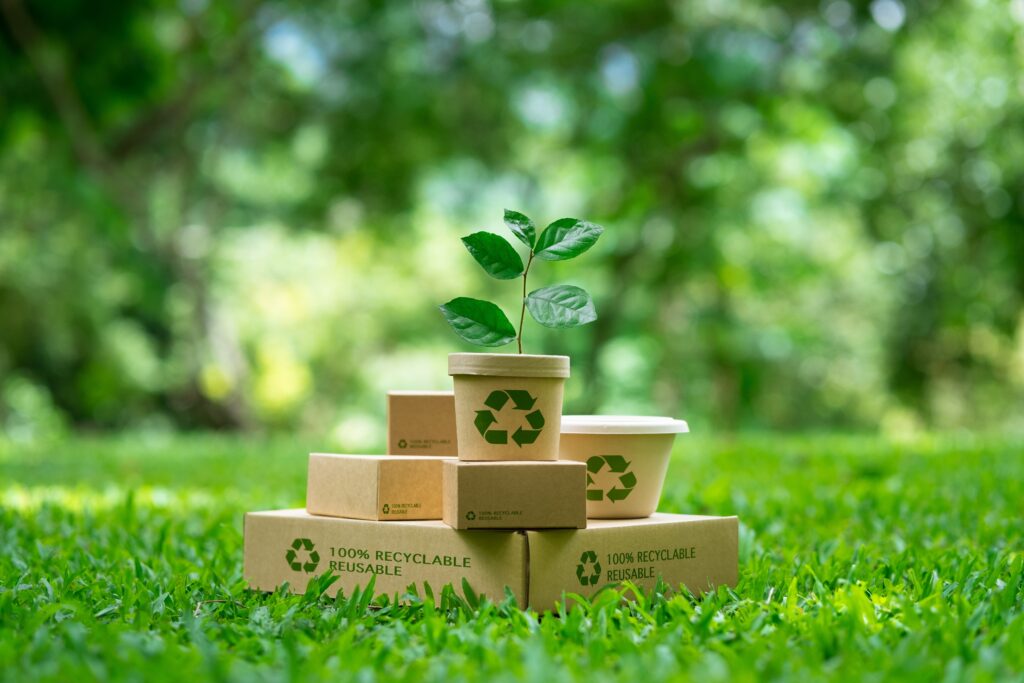
In today’s food industry, packaging is under the spotlight like never before. Consumers are demanding safer, more sustainable materials, while global regulations continue to tighten. At FoodChain ID, we’re driving positive change with industry-leading programs like the PackSafe Compliance Standard and the Plastic Free Management System.
In this exclusive Q&A, our experts share how businesses can confidently navigate compliance challenges, reduce single-use plastics, and build a more sustainable future.

Kris Callaert
Subject Matter Expert – Food Contact Materials
With over 31 years of experience, Kris Callaert is a recognized authority in food contact compliance, regulatory consulting, safety assessment, and plastic manufacturing.
Q: Can you share a short description of your packaging compliance assessment method? Who are the actors involved?
The PackSafe Compliance Standard was designed by FoodChain ID to provide a robust, auditable framework for evaluating the safety of food contact materials across the packaging supply chain. It aligns with both EU and global food contact legislation while helping businesses manage complex data and documentation efficiently.
The process begins with defining the packaging project—its intended use, product formulation, and raw materials. From there, brand owners, suppliers, and converters collaborate to ensure every material and process complies with regulatory standards. A compliance expert—either internal or external—coordinates the documentation, evaluates the regulatory status of substances, and identifies potential risks.
The PackSafe approach is built around four pillars:
- Regulatory Inventory Matrix (RIM): Mapping out all applicable regulations for each raw material.
- Compliance Specifications: Detailing the necessary compliance data for every legislative requirement.
- Product Specifications: Identifying the exact compliance tasks needed under each regulation.
- Communication Specifications: Ensuring all compliance data flows effectively across the supply chain.
This structure creates a clear and auditable compliance roadmap for businesses.
Q: How does the assessment help companies avoid hazardous substances in packaging?
PackSafe takes a risk-based approach. We look not only at substances intentionally added (IAS) but also Non-Intentionally Added Substances (NIAS) that may form during manufacturing or use—like by-products or degradation compounds. Companies assess their production processes for critical control points (CCPs), supported by tools like migration modeling or worst-case calculations, which often provide a more accurate risk assessment than physical testing.
When suppliers cannot share critical data, testing is performed, but the reasoning behind sample selection must be well-documented. We also encourage businesses to maintain a strong retained sample strategy for both raw materials and finished products to trace any issues quickly.
Ultimately, this science-based approach helps companies protect consumer health while minimizing regulatory risk.
Q: What happens if a business or product doesn’t comply with regulations?
Non-compliance can lead to severe consequences: product recalls, loss of market access, reputational harm, or even legal action. Our first step is always to identify the root cause and assess the impact—reviewing documentation, test results, and supply chain communication. Then we guide companies through corrective actions, which might include reformulation, supplier changes, or process adjustments.
The PackSafe Standard is specifically designed to prevent these issues by integrating compliance checks early in product development and maintaining a continuous improvement cycle.

Roberto Maresca
International Activities Coordinator, Bioagricert SRL (FoodChain ID)
Biologist with 14+ years of experience in agri-food certification, specializing in organic schemes and environmental sustainability.
Q: How does the Plastic Free Management System help the HORECA sector reduce single-use plastics?
The Plastic Free Management System offers a structured, auditable roadmap to help businesses identify, reduce, and ultimately eliminate single-use plastics of fossil origin. In the HORECA sector—where disposable items like bottled water, takeaway containers, and cleaning product packaging are common—this system has proven transformative.
The process starts with a full mapping of all single-use plastics in the operation, which raises internal awareness and creates a baseline for action. A personalized reduction plan is then developed, outlining measurable steps such as:
- Switching from bottled water to filtration and reusable containers.
- Replacing plastic pallet wraps with reusable covers.
- Moving from disposable soap bottles to refillable dispensers.
At the end of the year-long process, results are verified through an audit, and certification is awarded to businesses that demonstrate meaningful progress.
Q: What alternative materials does the system promote?
We encourage businesses to shift toward reusable and sustainable materials, such as glass, stainless steel, kraft paper, and biodegradable or compostable packaging where single use cannot be avoided. We also promote innovative solutions—refill stations, bulk dispensers, and ozonated water systems—to cut down on waste.
Q: What are the biggest challenges in adopting reusable foodservice containers, and how do you help companies overcome them?
Challenges include limited washing/storage space, higher upfront costs, and the need to maintain strict hygiene standards. In busy restaurant environments, changing workflows can be disruptive, and getting staff and suppliers on board is crucial.
Our system tackles these challenges through phased implementation. We provide training, create operational guidelines, and engage suppliers to ensure the entire value chain is aligned. This step-by-step approach allows businesses to test solutions before scaling them up, making the transition smoother and more sustainable.
Q: Why should a company pursue Plastic Free Certification
Plastic Free Certification is a credible, tangible step toward sustainability. It not only improves environmental impact but also boosts brand reputation and aligns with EU policies like the Green Deal. Businesses gain a competitive edge by showing measurable action, enhancing ESG performance, and appealing to eco-conscious customers.
This certification isn’t just about intentions—it’s about real, documented progress, which is why it resonates so strongly with stakeholders and consumers alike.
Leading the Future of Packaging
From compliance to sustainability, FoodChain ID provides the tools, expertise, and certifications that empower companies to protect both consumers and the planet.
Through initiatives like PackSafe and the Plastic Free Management System, we’re helping businesses build trust, stay ahead of regulations, and lead the charge toward a safer, more sustainable food industry.