Deliver a new degree of food transparency
Why brands are exploring Non-UPF Verified:
72%
of shoppers actively try to avoid UPFs
57%
of shoppers identify processing level as top purchase driver
How to Achieve Non-UPF Verified
Turn Formulation Choices into Defensible Claims
Step 1
Review ingredients and processing
Our team can help assess whether your formula and processes align with Non-UPF criteria.
Step 2
Gather formulation and supplier documentation
Organize the ingredient, process and supplier details needed to support review.
Step 3
Submit product information for evaluation
Once all information is recorded in SupplyTrak, our team will conduct a thorough audit.
Step 4
Receive verification & promote your products
As a Non-UPF Verified product, you are able to use the “Non-UPF Verified” seal on product packaging for a period of one year.
Step 5
Renew your Non-UPF Verified status annually
Keep verification with annual audit confirming recipes and processes align to the standard.
How We Help
Benefits of Non-UPF with FoodChain ID
Third-party verification mark
Stand out and earn trust in a crowded market
Gain credible claims consumers value for purchasing choices
A clear commercial story for marketing, sales and retail teams
Deliver an aligned vision around processing that resonates
Eliminate misaligned narratives that dilute impact at the shelf
Experienced support to guide verification process
A dedicated onboarding specialist supports you in every step
Avoid time-consuming missteps and rework
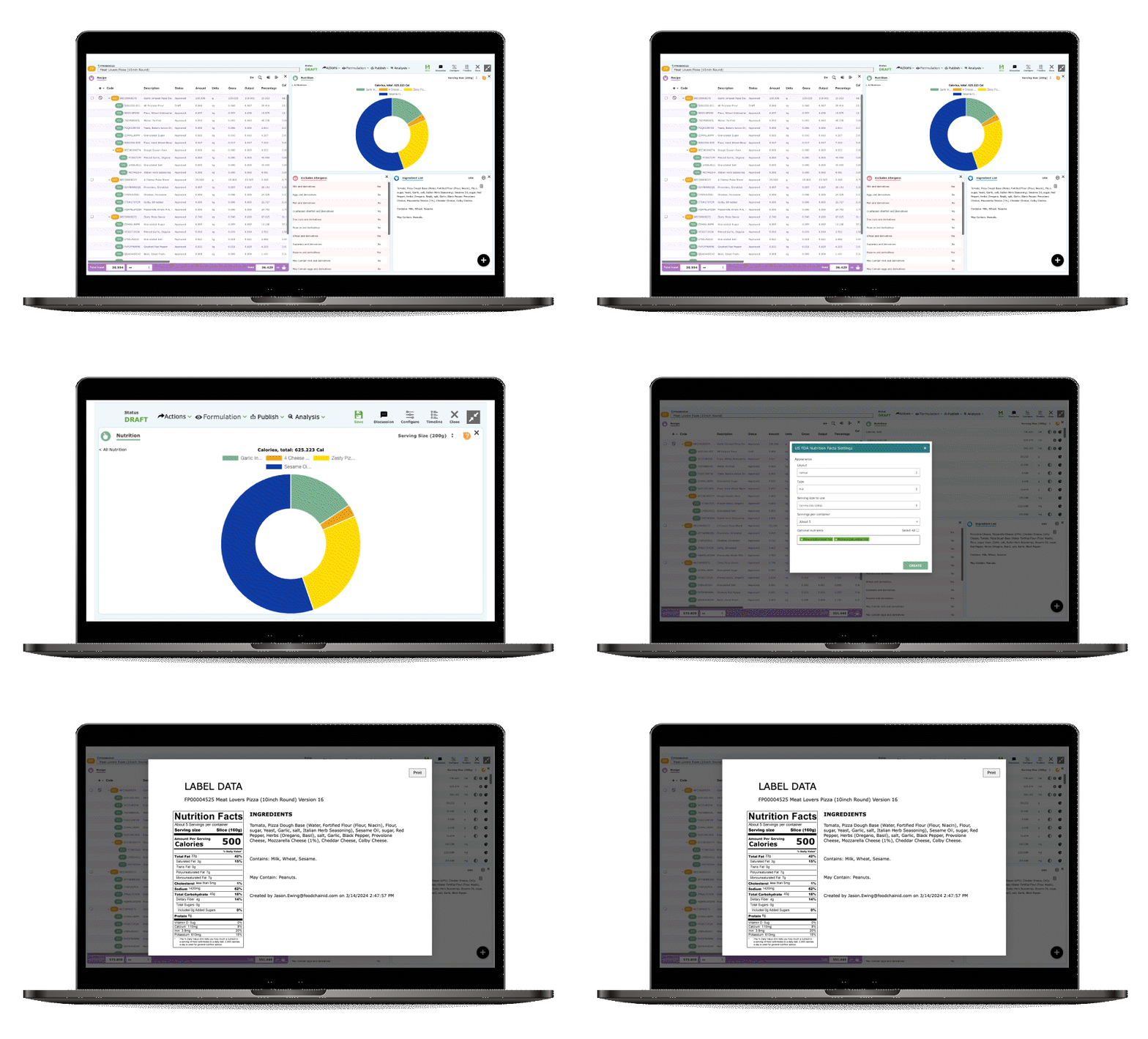
Streamlined certification management in SupplyTrak®
Keep track of documentation across multiple certifications
Eliminate fragmented records across systems and spreadsheets
Extend Your Capabilities
Build a Stronger Path from Formulation to Market-ready Claims

FAQ
A Non-UPF Verified product is a human food product that meets the Non-UPF Verified Standard’s requirements for ingredient integrity, formulation and processing. The standard evaluates both what is in the product and how ingredients and finished foods are processed. This type of verification is part of a broader landscape of product and label certification programs that help validate product attributes and claims.
The Non-UPF Standard excludes items such as produce, vitamins and dietary supplements, alcoholic beverages and products subject to U.S. bioengineered food disclosure. Companies developing vitamins and dietary supplements may instead require specialized supplements consulting support.
Clean label is often interpreted differently by each company. Non-UPF Verification applies a defined third-party standard and annual review. This provides a more structured approach than many voluntary marketing claims and can complement broader food certifications and claims strategies.
Currently, natural flavor compliance is optional, but participants must disclose flavor use and the flavor must match a corresponding ingredient.
Non-Ultraprocessed Food Verification is a symbol that empowers consumers to make transparent, values-driven choices about their food. Non-UPF is not a signifier of nutritional value and is not a health claim. Consumers often evaluate Non-UPF products alongside other verified product attributes such as Non-GMO Project Verification or USDA Organic certification.
Review the standard
See the criteria your product must meet so recipe, regulatory, and quality teams can assess risk early.
Read the Standard