

What Food Companies Should Monitor Before MRLs Change
Organizations that wait for published MRL changes may have less time to assess potential impacts on suppliers, products, and export markets. Pesticide MRLs continually evolve as scientific assessments, regulatory reviews, policy decisions, and enforcement activities shape food safety requirements around the world. Monitoring these activities provides organizations with important context, greater visibility into potential changes, and additional time to evaluate potential business impacts.
At a Glance
- Keeping pace with pesticide MRL requirements can be challenging, particularly for organizations managing products, suppliers, and export markets across multiple jurisdictions.
- Effective MRLs are just one milestone in a broader scientific and regulatory process. Monitoring the regulatory pipeline provides earlier visibility into potential changes and additional time to evaluate business impacts before new requirements become effective.
Regulatory Developments Worth Monitoring
Scientific Review & Risk Assessments
Regulatory authorities evaluate residue data, toxicology studies, dietary exposure assessments, and other scientific evidence to determine whether a proposed or existing MRL is scientifcially justified and safe for consumers.
Why it Matters
These assessments can provide the earliest indication of whether a new or modified MRL is likely to be approved, revised, delayed or rejected.
Import Tolerance Decisions
Import tolerance applications request the establishment or modification of an MRL to permit the import of food commodities treated with a pesticide according to authorized agricultural practices in another country, even if that pesticide use is not registered domestically.
Why it Matters
Import tolerance decisions can directly affect market access and supply chain continuity by determining whether imported commodities can legally enter a country while remaining compliant with local MRL requirements.
National and Regional Regulatory Developments
National authorities, regional bodies, and international organizations such as Codex Alimentarius continuously evaluate scientific evidence and regulatory priorities that can influence pesticide standards worldwide.
Why it Matters
Many countries consider or adopt Codex and regional standards when establishing national MRLs. Monitoring these developments can provide advance notice of changes that may affect global market access, compliance obligations and supply chain strategy.
Proposed and Pending MRLs
Proposed MRLs are draft regulatory actions open for stakeholder review and comment, while pending MRLs are approved residue limits awaiting a delayed effective or implementation date.
Why it Matters
These stages offer a critical window to assess business impacts, engage in regulatory processes when appropriate, and prepare operationally for upcoming changes before they take effect.
Regulatory Monitoring Checklist
Organizations responsible for regulatory compliance should routinely monitor:
- Scientific assessments
- Import tolerance decisions
- Proposed MRLs
- Pending MRLs
- National and regional regulatory developments
- Regulatory implementation timelines
- Priority export markets
The regulatory process varies by jurisdiction. The European Union provides one example of a structured pathway through which scientific assessments and regulatory decisions ultimately result in new or revised MRL requirements, beginning with an EFSA scientific assessment and progressing through multiple stages of review, consultation, and regulatory decision-making before official implementation.
Where These Developments Fit Within the EU MRL Process
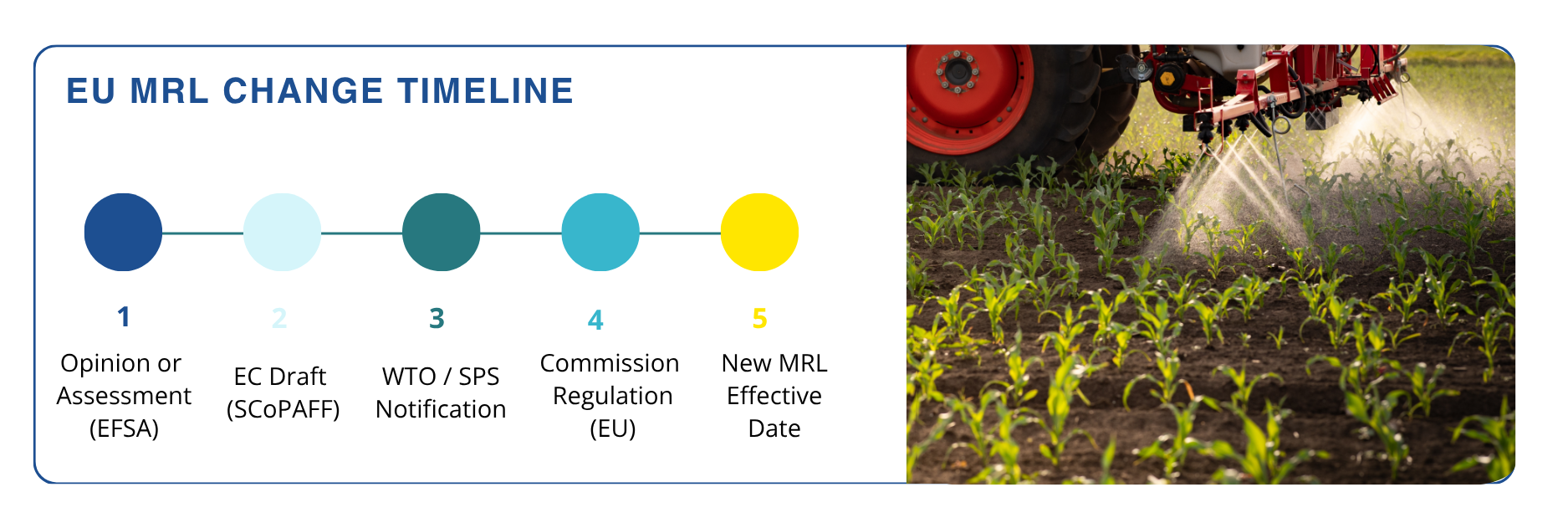
Organizations can monitor regulatory activity throughout this process before new MRLs become effective.
Executive Takeaway
Monitoring published MRLs remains an essential part of regulatory compliance. Monitoring the scientific assessments, regulatory reviews, and policy decisions that occur before new MRLs are adopted provides additional time to evaluate potential business impacts and prepare for change.
Learn More
See how FoodChain ID Regulatory Limits helps organizations track proposed, pending, and current pesticide MRL developments across global markets throughout the regulatory process.